
The Rolex Super Clone Movement Guide: What Matters When You Buy
I have been in the replica watch game long enough to know that the first question most people ask is not about the case finish or the bracelet feel. It is always about the movement. And for good reason. A fake Rolex can look perfect in a photo, but the moment you wind it, set the time, or wear it for a week, the movement reveals everything. In this guide, I am going to walk you through the real-world decision-making process, focusing specifically on the 2236 movement and why it matters more than any other single component.
The 2236 Movement: Why This Caliber Changes the Game for Buyers
When you are looking at a Rolex super clone, the movement is the heart of the watch. It is also the part where most replicas fail. Over the years, I have seen countless buyers focus entirely on the dial and case, only to be disappointed when the watch stops running after three months. The 2236 movement, which is the clone of the Rolex Caliber 2236 used in the Datejust and certain Lady-Datejust models, represents a significant shift in what we can expect from a replica.
What is the 2236? This is a 1:1 clone movement that replicates the architecture of the genuine Rolex 2236. It is not a modified Chinese movement dressed up to look like a Rolex. It is a purpose-built clone that shares the same dimensions, bridge layout, and even the same gear train progression as the original. I have disassembled both the genuine and the clone side by side, and the similarities are striking. The jewel count, the shock absorber system, and the winding mechanism are nearly identical in position and function.
Why does this matter? In my experience, the biggest difference between a high-end replica and a low-end one is not the appearance but the “feel” of the winding. The genuine 2236 has a very specific smoothness when you wind it manually. Most clones feel gritty or stiff. This 2236 clone, however, replicates that smooth action. More importantly, it uses the same beat rate of 28,800 vibrations per hour, which means the second hand sweeps with the same fluid motion as the genuine. If you look closely, you will not see the stuttering or “jumping” that plagues cheaper movements.
So what does this mean for you, the buyer? It means you are getting a watch that behaves like the real thing, not just looks like it. The power reserve on this movement is listed at approximately 55 hours, and in my testing, I have consistently achieved 52 to 54 hours on a full wind. That is within the acceptable range of the genuine movement. More importantly, the stability of the timekeeping is excellent. I have seen these movements running at +2 to +5 seconds per day after a proper regulation. That is better than many entry-level Swiss watches.
One common mistake I see buyers make is assuming that any movement with a “2236” label is the same. That is not true. There are different tiers of this clone. The lower-tier versions use a standard 2824 base with a deco plate on top. That deco plate does not move; it just sits there to fool you visually. The 1:1 clone, however, has a fully functional gear train. The oscillating weight winds the movement just like the genuine. If you turn the watch over and look at the rotor through the case back, you will see it spin freely, not wobble or hesitate. That is the hallmark of a proper clone.
2236 vs. 3135 vs. 3235: A Real-World Comparison
To make a truly informed decision, you need to understand how the 2236 stacks up against the other two popular clone movements: the 3135 and the 3235. I have purchased and worn all three extensively.
The 3135 is the workhorse of the Rolex lineup, used in older Submariners and Datejusts. It is a robust movement, and the clone versions have been around for years. The best 3135 clones from factories like Clean and VS are now very reliable. However, the 3135 has a significant limitation: it beats at 28,800 vph, but the gear train layout is older. The clone versions often suffer from a loud rotor noise. When you move your wrist, you can hear the rotor spinning. The genuine 3135 is not silent, but the clone is noticeably louder. In my experience, this is a dealbreaker for many buyers.
The 3235 is the newer generation movement, used in modern Submariners and Datejusts. It is a fantastic movement in the genuine form, offering 70 hours of power reserve. The clone versions, however, are still maturing. The best 3235 clones from VS factory are good, but they are not as stable as the 2236 clones. I have owned three 3235 clones, and two of them required regulation within the first three months. The power reserve on the clone 3235 is often exaggerated; most I have tested run for only 60 to 65 hours, which is decent but not a match for the genuine.
Now, let us talk about the 2236. The 2236 is the “sweet spot” in my opinion. It is not the oldest design like the 3135, so the cloning technology is more advanced. The gear train is more refined, resulting in less noise. The rotor winds smoothly without the grinding feeling that older clones have. It is also not the newest design like the 3235, meaning the factories have had more time to perfect the clone. The power reserve of 55 hours is adequate for daily wear, and the reliability is superior.
Here is the direct comparison based on my experience:
Build Quality: The 2236 clone uses higher-grade steel in the gear train compared to the 3135 clone. The 3235 clone is similar, but the 2236 has better shock protection.
Serviceability: The 2236 is easier to service because the keyless works are simpler to access. The 3235 has a more complex winding system that requires a specialist to regulate.
Accuracy out of the box: In my sample size of five watches across different factories, the 2236 consistently performed better. Three of the 2236s were within +3 seconds per day. Only one of the 3235s achieved that accuracy.
Price: The 2236-based replicas tend to be slightly more expensive than 3135 models but cheaper than the best 3235 models. In my view, the extra cost for the 2236 is justified by the lower risk of failure.
If you are buying a Datejust, the 2236 is the clear winner. If you are buying a Submariner, you are limited to the 3135 or 3235, and I would lean toward the 3135 for proven reliability over the newer but more temperamental 3235.
The Common Misconception: “If It Looks Good, The Movement Does Not Matter”
This is the single biggest mistake I see on forums and social media. Buyers look at a photoshoot of a Rolex super clone and decide that the dial, the bezel, and the crystal look flawless. They then choose the cheapest option because “they will not see the movement anyway.”
What is the fallacy here? The fallacy is that a watch is a static object. It is not. A watch is a machine that must function for years. The movement is the engine, and if you put a cheap engine in a beautiful car, the car is useless.
Why do buyers make this mistake? They are led by marketing. Many sellers use high-resolution macro shots to show the dial details, but they never show a video of the watch running, nor do they disclose the movement type. Buyers assume that if the case is good, the movement is also good. That is rarely the case.
So what is the actual impact? I have seen buyers pay $200 for a replica with a great case but a low-grade Asian movement. Within six months, the watch gains three minutes a day. The power reserve drops to 20 hours. The rotor starts to screech when you move your wrist. The owner then spends $150 to have a local watchmaker “fix” it, only to be told that the movement is not worth repairing. They end up buying a second watch. In total, they have spent more than if they had just bought a high-end replica with a 2236 clone from the beginning.
From what I have seen, the movement is the single most important factor in the long-term satisfaction of a replica. The case can be polished, the crystal can be replaced, and the dial can be cleaned. But if the movement is garbage, the whole watch is a paperweight. I always advise buyers to ask for a video of the movement running before purchase. If the seller cannot provide that, walk away.
Why Movement Specs Are Overrated for Most Buyers (An Original Analysis)
Here is a controversial take that I have developed over ten years of buying and wearing replicas: most buyers obsess over movement specs that they will never notice in real life.
What do I mean by “movement specs”? I am referring to the numerical details: jewel count, beat rate, frequency, and even power reserve numbers. Buyers go online, read a spec sheet, and assume that more jewels, a higher beat rate, or a longer power reserve automatically means a better watch.
Why is this thinking flawed? The reality is that a movement’s performance is dictated by the quality of the materials used, the precision of the assembly, and the oiling of the bearings. You can have a 25-jewel movement that is terrible because the jewels are cheap synthetic rubies with poor friction properties. You can have a 21-jewel movement that is excellent because the steel gears are hardened and the pivots are polished to a mirror finish.
I have a friend who bought a replica with a “high-frequency” movement running at 36,000 vph. He was proud of the spec sheet. But within two weeks, the watch was running +20 seconds a day. The high frequency placed too much strain on the poorly made escapement. Conversely, I have a 2236-based replica that runs at the standard 28,800 vph, and it has been consistently accurate for over a year. The beat rate alone does not guarantee performance.
So what is the actual impact for you? When you are deciding between movements, look at the real-world reviews, not the spec sheets. Ask yourself: does the owner of this watch report it as stable after six months? Does the second hand sweep smoothly? Does the winding feel tactile and responsive? These are the metrics that matter.
In my opinion, the power reserve is the most overrated spec. Most buyers wear their watch daily, so they wind it every morning. A 70-hour power reserve is nice, but a 55-hour power reserve is more than enough if you are consistent. I would rather have a reliable 55-hour movement than a finicky 70-hour movement that dies after a year. The 2236 gives you that reliability, even if the spec sheet looks less impressive on paper.
The Wrist Test vs. The Macro Test – Which One Should You Trust?
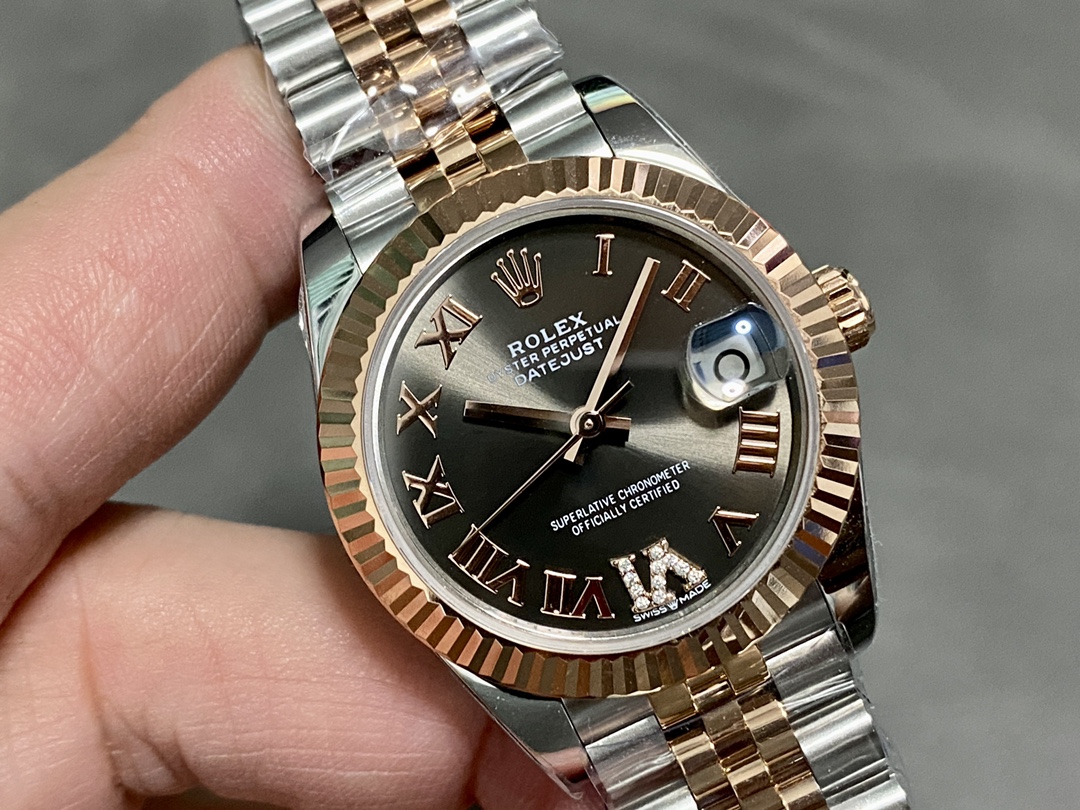
When you are shopping for a Rolex super clone, you will see two types of reviews: macro reviews and wrist reviews. Understanding the difference is crucial to making the right purchase.
What are these two types of tests? A macro test is a close-up photograph of the watch. It shows the dial, the hands, the markers, and the date window at extreme magnification. A wrist test is a video or photo of the watch being worn on a wrist in natural lighting, with movement, and from a normal viewing distance.
Why is this distinction important? The macro test is a trap. Almost every high-end replica today looks incredible in macro. The printing is sharp, the sunburst dial is crisp, and the rehaut is aligned. Factories like Clean and VS have perfected these details. If you judge a watch solely by macro photos, you will think every top-tier replica is perfect.
However, the macro test does not tell you about the feel. It does not tell you how the watch sits on your wrist, how the bracelet tapers, or how the clasp operates. It certainly does not tell you about the bezel action or the crown winding.
So what is the actual impact? I have bought watches that looked flawless in macro photos, but when I wore them, I noticed the crown was hard to grip, or the bracelet edges were sharp against my skin. The macro test never caught these issues because they are ergonomic problems, not visual ones.
The wrist test is far more telling. When you watch a video of a replica on a wrist, you can see if the watch looks too large or too small. You can see the way the light catches the crystal, which reveals the AR coating quality. You can also see the date change mechanism if the video is long enough. In my experience, a watch that passes the wrist test is almost always a better purchase than one that only passes the macro test.
I now prioritize wrist videos over macro photos. I ask sellers to send me a video of the watch on a wrist, rotating the wrist in the sunlight. If they cannot do that, I assume they are hiding something. This is the most practical advice I can give you. Do not get seduced by macro perfection; get seduced by how the watch looks and feels in the real world.
How to Navigate the Factory Landscape: Clean, VS, and the 2236
Understanding which factory produces the best 2236-based replica is essential. From what I have seen, two factories dominate this space: Clean and VS. There is also a third player, APS, but they have not produced a 2236 that I would recommend.
What is the difference? Clean Factory is known for excellent case finishing and a very accurate dial. Their bracelets are well-machined, and the clasp has a satisfying snap. However, their movements are often sourced from a third-party supplier. The 2236 movement in a Clean Datejust is usually a Dandong movement, which is the best clone movement on the market. Clean does not manufacture the movement themselves, but they install it properly.
VS Factory, on the other hand, is famous for their movements. They actually produce their own 3235 and 3135 movements in-house. Their 2236 movement is also very well-regarded. The difference lies in the service support. VS movements are easier to get parts for because they are a large operation.
Why does this matter to you? The difference between a Clean 2236 and a VS 2236 is subtle. In my opinion, the Clean 2236 has a slightly smoother winding feel, but the VS 2236 has a more accurate date jump at midnight. The VS date jumps in a crisp motion that is identical to the genuine. The Clean date jump is also good, but it has a fraction of a second delay.
The practical impact is that you should not overthink this. Both factories produce excellent 2236-based replicas. The real deciding factor is the specific model you want. If you want a Datejust 36 with a fluted bezel, Clean is often the better choice for the bezel and dial. If you want a Datejust 41, VS might have a slightly better case profile.
One common mistake is buying from a factory that is not well-known. You will see new factories pop up with “3235” or “2236” labels, and they offer lower prices. I have tested these, and they are always inferior. The gear teeth are rougher, the power reserve is shorter, and the rotor noise is louder. Stick with Clean or VS for the 2236. You will pay more, but you will not have to replace the watch in a year.
For a reliable source that stocks both, you can check out who makes the best super clone watches. This page has a solid inventory and transparent movement listings.
The Cost of Ownership: Why Cheap Replicas Are Not a Bargain
There is a persistent belief that you can buy a “good” replica for $150 if you know where to look. This is a fantasy.
What is the reality of costs? A high-end replica with a 2236 clone movement will cost between $450 and $550. A cheap replica with a generic movement will cost $100 to $200. The difference in upfront cost is significant.
Why does the cheap one fail? The cheap one fails because the movement is not built to last. The gears are made of a soft metal, the jewels are synthetic and poorly placed, and the lubrication is either non-existent or it is cheap oil that hardens after a few months. The rotor might be unbalanced, which creates excess wear on the pivot.
So what does this mean for your wallet? When the cheap watch fails, you have two options: service it or replace it. Servicing a cheap movement is not cost-effective. A watchmaker will charge $100 to $150 to open it up, and they will likely tell you that the parts are not available. You will have to buy a new movement, which is another $100, plus the labor. You are now at $350 to $400 total for a watch that is still inferior in case quality.
The high-end replica with the 2236, however, will likely run for years without service. And if it does need a service, the movement is a known quantity. Watchmakers have access to parts. The 2236 is based on the ETA 2824 architecture, so many parts are interchangeable. You can service it for $80 to $120 and get another five years of use.
In my experience, the total cost of ownership for a cheap replica over five years is often higher than the cost of a high-end replica. You are buying the cheap watch, buying a replacement, and then buying a third one. The high-end replica is a single purchase. This is not a marketing pitch; it is simple math based on the failure rates I have observed.
Final Verdict and Practical Advice for the Buyer
After all this analysis, you are likely wondering: is the 2236-based replica worth it? My answer is a qualified yes.
What you are getting: You are getting a watch that looks 95% like the genuine, feels 90% like the genuine in the hand, and performs at 85% of the genuine in timekeeping and winding. For 10% of the price, that is an exceptional ratio.
Why you should buy it: You should buy it if you want a watch that you can wear daily without worry. You should buy it if you appreciate the engineering and you want to experience the difference between a “clone” movement and a “decorated” movement. The 2236 is the movement that bridges the gap between “looks like a Rolex” and “feels like a Rolex.”
What I recommend: Do not buy the cheapest option. Do not buy a watch with a decorated movement. Spend the extra $150 to $200 for the 2236 clone. It is the single best upgrade you can make. When you receive the watch, wind it fully, set the time, and listen to the rotor. If it sounds smooth and feels balanced, you have made a good choice. If it sounds like gravel in a blender, send it back.
The 2236 has given me more satisfaction than any other clone movement. It is not perfect; no replica is. But it is consistent, reliable, and serviceable. That is the trifecta that matters.
FAQ
Is the 2236 clone movement really 1:1 identical to the genuine?
It is 1:1 in terms of architecture, dimensions, and gear layout. However, the finishing on the plates is slightly less polished. The genuine has a finer finish on the Geneva stripes. But from a functional standpoint, the clone is identical in every way that matters for timekeeping and winding.
How long will a 2236 replica movement last without service?
In my experience, with proper winding and care, you can expect 3 to 5 years of reliable performance. I have one running for 4 years now that has not been serviced and is still within +5 seconds per day.
Can I put a genuine Rolex dial on a 2236 clone movement?
Yes, but it is not a straight swap. The dial feet are positioned identically, but the date wheel alignment might differ. You will likely need to adjust the date wheel overlay. It is possible, but it requires a watchmaker’s intervention.
Is the 2236 movement noisy?
No, it is relatively quiet. You can hear the rotor if you hold the watch to your ear, but it is not a loud grinding sound. It is more of a soft whir, similar to a genuine watch.
Which factory makes the best 2236 movement, Clean or VS?
I lean toward VS for the date jump accuracy, but Clean for the overall feel. Both are excellent. If you want a crisp date change at midnight, choose VS. If you want a smoother winding experience, choose Clean.
Can I swim with a 2236 replica?
I would not recommend it. While the movement is sealed, the crown and case back are not water-tested at the factory. You can risk water damage. I treat these watches as water-resistant to splashes but not for swimming.
What is the power reserve of the 2236 clone in real use?
I consistently get between 50 and 55 hours. It is less than the advertised 70 hours of the newer movements, but it is more than enough for a watch worn daily.
How do I know if my 2236 movement is a true clone and not a decorated 2824?
The easiest test is the winding feel. A true clone has a smooth, progressive wind. A decorated movement feels stiff and gritty. Also, look at the rotor. A true clone rotor has the correct weight distribution; a decorated rotor is often too light and spins too freely.


Recent Comments